Twelve-Month Budget Tool for Google Sheets
Managing personal finances can feel overwhelming, especially when you are juggling multiple bills, variable income, and unexpected expenses. A structured system that lays everything out in one place changes the game entirely. The Full Twelve-Month Budget Tool I Google offers exactly that: a clean, intuitive Google Sheets template designed to help you track your budget, bills, and payments across an entire year. Whether you are a freelancer trying to smooth out irregular earnings or a busy professional aiming to get a clearer picture of your monthly spending, this tool provides a straightforward path to financial clarity without the complexity of traditional budgeting software.
What This Budget Tool Actually Does
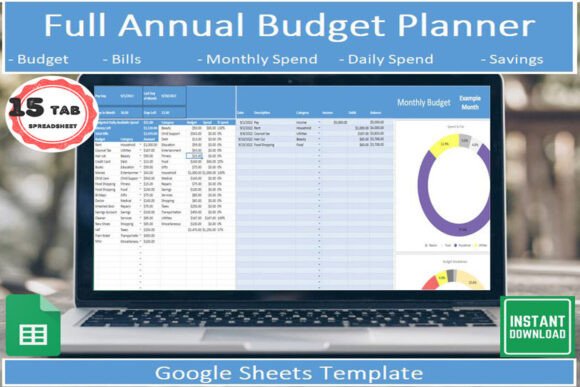
At its core, the Full Twelve-Month Budget Tool I Google is a digital spreadsheet that replaces the hassle of manual tracking with a ready-made structure. It includes twelve monthly tabs, so you can monitor your income and expenses for every month of the year. An annual dashboard sits on top, pulling your data into helpful charts that give you a quick visual summary of where your money is going. You also get a tab filled with example entries and a category guide that helps you classify your spending in a way that reveals meaningful patterns. The template comes with clear instructions, making it accessible even if you have never used Google Sheets for budgeting before. All you need is a free Google account, and you can start using it immediately on your computer or through the Google Sheets mobile app.
Why a Full-Year View Matters
Many budgeting tools focus on a single month, which can make it difficult to see the bigger picture. A monthly snapshot might show that you spent less than you earned, but it does not reveal how seasonal expenses or irregular bills affect your finances over time. The Full Twelve-Month Budget Tool I Google solves this by letting you track every month side by side. You can see how your spending changes during the holidays, when insurance premiums are due, or during months when freelance income is higher. This annual perspective helps you plan for recurring costs and identify trends that a one-month view would miss. It also makes it easier to set realistic savings goals because you are working with a full year of data rather than guessing based on a single month.
Practical Use Cases for Different Lifestyles
One of the strengths of this template is its flexibility. It works for a wide range of situations, not just traditional household budgeting. Here are a few realistic examples of how different people might use it:
- Freelancers and gig workers often deal with income that fluctuates from month to month. By using the twelve monthly tabs, they can log each payment as it arrives and compare their earnings against fixed bills like rent or internet. The dashboard charts make it easy to spot which months are lean and which are abundant, helping them set aside money during good months to cover slower periods.
- Small business owners can use the template to separate personal and business expenses while still keeping everything in one file. The category examples tab offers ideas for grouping expenses like office supplies, marketing, and utilities, which simplifies tax preparation and gives a clearer view of operational costs.
- Educators and students on a fixed schedule can track semester-based expenses such as textbooks, lab fees, and housing deposits. The annual layout allows them to plan for the entire academic year rather than worrying about each month separately.
- Households managing shared expenses can collaborate on the same Google Sheets file, making it easy for partners or family members to see the budget and add entries. The bill payment tracker within the template ensures that nothing slips through the cracks, from utility bills to subscription services.
- Marketers and bloggers who run side projects or online businesses can monitor both their project costs and personal spending in one place. This helps them see whether their side hustle is actually profitable after accounting for all expenses.
Key Features That Make It Easy to Use
The template includes several elements designed to reduce friction and save time. First, the tab of examples shows you exactly how to enter your income and expenses, so you are not left guessing. The category examples tab goes a step further by suggesting ways to group your spending for greater insight. For instance, instead of lumping all transportation costs together, you might separate fuel, public transit, and vehicle maintenance to see where you can cut back. The annual dashboard updates automatically as you fill in your monthly tabs, giving you real-time feedback on your progress. And if you want to reuse the template for a new year, you simply make another copy of the file. Everything is laid out in a way that respects your time, with no complex setup or learning curve.
What to Consider Before You Start
While the Full Twelve-Month Budget Tool I Google is designed to be beginner-friendly, there are a few things worth thinking about ahead of time to get the most out of it. First, you will need a Google account to access and edit the template. If you already use Gmail or Google Drive, you are set. If not, creating an account is free and takes just a few minutes. The template is delivered as a PDF link that directs you to the Google Sheets file, so make sure you have a stable internet connection when you first download it.
Another consideration is consistency. A budget tracker is only as useful as the data you put into it. Set a regular time each week to update your entries, even if it is just five minutes. The template is simple enough that you can do this on your phone during a commute or while waiting in line. If you fall behind for a month or two, do not stress. Just pick up from where you left off. The annual view will still be valuable even if some months are incomplete.
Also, think about how detailed you want your categories to be. The category examples tab provides a solid starting point, but you can customize it to match your actual spending habits. Some people prefer broad categories like housing, food, and entertainment. Others find more value in granular tracking that separates groceries from dining out or electricity from water bills. Start simple and adjust as you learn what matters most to your financial goals.
Getting the Most Out of the Dashboard Charts
The annual dashboard is one of the most useful parts of the template, but it works best when you feed it consistent data. The charts update automatically, showing you trends in income, expenses, and savings over the twelve-month period. This visual feedback can be surprisingly motivating. When you see a chart that shows your spending dipping in months where you cut back on dining out or subscription services, it reinforces good habits. Conversely, if you notice a steady rise in a particular category, it prompts you to investigate and make changes before it becomes a bigger problem. The dashboard is not just a fancy add-on; it is a practical tool for ongoing financial awareness.
Adapting the Template to Your Own Needs
One of the reasons this template appeals to such a broad audience is how easy it is to modify. You can rename the monthly tabs, add new categories, or hide rows you do not need. If you want to track savings goals alongside your regular budget, you can add a column for that. If you prefer to see your bills sorted by due date, you can rearrange the rows. The template gives you a solid foundation without locking you into a rigid structure. This flexibility is especially valuable for entrepreneurs and creatives whose financial lives do not fit neatly into standard budgeting categories. You are not forced to adapt your habits to the tool; the tool adapts to you.
A Tool That Grows With You
As your financial situation changes, the Full Twelve-Month Budget Tool I Google can change with you. When you start a new job, take on a side project, or move to a new city, you can update your income and expense tabs without starting from scratch. The annual dashboard will immediately reflect the new data, giving you a clear picture of how your financial landscape has shifted. This continuity is something that paper planners and one-off spreadsheets cannot offer. You build a history of your finances over time, which becomes a valuable reference for future decisions like applying for a loan, planning a vacation, or deciding whether to take on a big expense.
In a world where financial tools often promise more than they deliver, this template stands out because it does one thing well: it gives you a clear, annual view of your money in a format you already understand. No advertisements, no upsells, no confusing features. Just a solid spreadsheet that works the way you expect it to. If you have been looking for a way to get your budget under control without investing hours into learning new software, the Full Twelve-Month Budget Tool I Google is worth your time. Download it, make a copy, and start filling in your numbers. You might be surprised how much clarity a simple spreadsheet can bring.