Mood Tracker Canva Template: Track Emotions with Ease
Keeping track of your emotions can feel like a small task, but it has a surprising impact on how you understand yourself. A mood tracker helps you notice patterns in your feelings, identify triggers, and see how your emotional state shifts over time. If you have ever wanted a simple way to log your moods without spending hours designing something from scratch, a Mood Tracker Canva Template offers a practical starting point. These ready-made designs let you focus on what matters most—building a habit that supports your well-being.
What Makes a Mood Tracker Canva Template Useful?
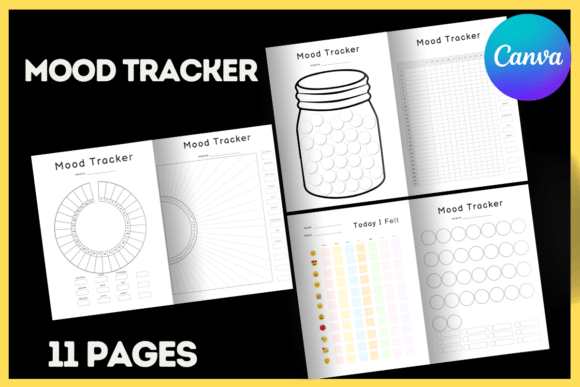
A mood tracker is essentially a visual log where you record how you feel each day. It can take the form of a grid, calendar, chart, or even a creative layout with colors and icons. The Mood Tracker Canva Template simplifies this process by giving you a polished layout that you can personalize in minutes. Instead of opening a blank document and wondering where to begin, you get a structure that is already thought through. You just adjust the colors, fonts, and details to match your style.
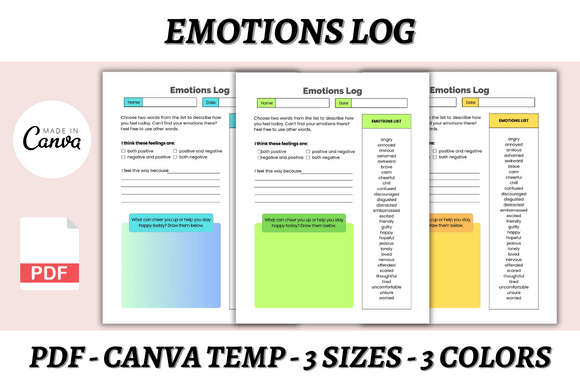
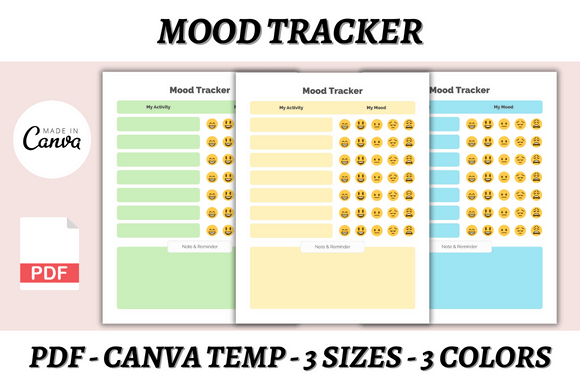
These templates come in multiple sizes—A4, A5, and US Letter—so you can choose the format that fits your notebook, planner, or binder. Whether you prefer a compact size to carry around or a larger page for more detail, the choice is yours. Having three color options also means you are not locked into a single aesthetic. You can pick a palette that feels calming, energizing, or simply matches your existing planner theme.
Why People Are Drawn to Editable Mood Trackers
Many people want to start tracking their moods but avoid it because they think it will take too much time or require design skills. That is where Mood Tracker Canva Template This is Editable Mood Tracker Canva Template shines. You do not need to be a graphic designer or own expensive software. With a free Canva account, you can open the template, change anything you like, and download it as a PDF or image. The editing process is intuitive: click on a text box to change the font, select a new color from the palette, or drag icons into place.
For beginners, this ease of use removes a major barrier. You might be someone who wants to track your anxiety levels, sleep quality, or daily energy. Maybe you are a therapist looking for a simple handout for clients. Or you could be a parent helping a child understand their feelings. The template adapts to all these situations because you can modify the labels, add your own categories, and adjust the design to suit the person using it.
Tracking Emotions Without the Overwhelm
Life is busy, and adding another task to your routine can feel daunting. A mood tracker works best when it is simple enough to use every day. The pre-built layout in this Mood Tracker Canva Template encourages consistency. You are not figuring out how to structure the page each time. You just fill in your entry and move on. Over weeks and months, the accumulated data reveals insights you might otherwise miss. Perhaps you notice that your mood dips on certain days of the week or improves after specific activities. Those observations can guide small changes that make a real difference.
Practical Use Cases for Different Audiences
The beauty of an editable Canva template is that it fits many contexts. Here are a few realistic ways people use it:
- Personal journaling: Combine your mood tracker with a daily reflection. Note what happened, how you reacted, and what helped. Over time, you build a personal emotional map.
- Mental health support: Therapists and counselors often recommend mood tracking as a tool for self-awareness. A printable template makes it easy to share with clients during sessions or as homework.
- Classroom or homeschool settings: Teachers and parents can use mood trackers to help children express their feelings in a non-verbal way. A simple color-coded system works well for younger kids.
- Wellness coaching: Coaches who work with clients on stress management or habit formation can include a mood tracker as part of a broader wellness plan. It adds a measurable component to discussions.
- Bullet journaling and planning: If you enjoy creative planning, the template gives you a foundation to decorate further. Add stickers, washi tape, or hand-drawn elements to make it unique.
- Commercial products: Bloggers, content creators, and Etsy sellers can customize the template and sell it as their own product. This is a practical way to offer digital downloads without starting from zero.
Editing and Customization: What You Need to Know
To edit this template, you only need the free version of Canva. Sign up at canva.com, upload the template, and start making changes. You can adjust fonts, sizes, colors, layout style, and even add your own logo or icons. If you want to use it for a brand or business, you can match the look to your existing identity. The flexibility means you are not stuck with a generic design. You can make it feel personal or professional, depending on your goal.
One of the standout features of this Mood Tracker Canva Template is that it is pre-designed to save time. You do not have to worry about alignment, spacing, or color theory. The heavy lifting is done. You just add your personal touches. This is especially valuable if you are creating multiple products or resources and need to maintain consistency without spending hours on each one.
What You Get with the Template
The package includes three Canva templates in A4, A5, and US Letter sizes, plus three PDF versions of the same sizes. You also get three color options, lifetime access, and instant download. That means you can come back to it whenever you need a fresh copy or want to create a new variation. Since the template is editable, you can reuse it month after month by simply updating the dates or changing the color scheme for a new season.
Important Things to Consider Before Using a Mood Tracker
While a mood tracker is a helpful tool, it works best when approached with the right mindset. Here are a few practical observations to keep in mind:
- Keep it simple at first: If you try to track too many emotions or details, you might feel overwhelmed. Start with a few core moods like happy, sad, anxious, calm, and energized. You can always add more later.
- Consistency matters more than perfection: Missing a day is okay. The goal is to build a habit over time, not to fill every square perfectly. If you forget, just pick up where you left off.
- Use colors that resonate with you: The template comes with three color options, but you can customize further. Choose shades that feel intuitive. For example, blue might represent calm, yellow could mean happy, and red might indicate frustration.
- Consider your privacy: If you are using a digital version stored on your device or in the cloud, think about who might have access. A printed page kept in a personal journal offers more privacy if that matters to you.
- Reflect on the data periodically: The real value of tracking comes from reviewing your entries after a few weeks or months. Look for patterns and ask yourself what might be influencing your moods. This reflection turns raw data into insight.
How Creators and Entrepreneurs Benefit from This Template
If you run a blog, an online shop, or a content channel, you know how time-consuming it can be to create resources from scratch. The Mood Tracker Canva Template is built for reuse and resale. You can customize it with your branding, add your own icons or logo, and sell it on platforms like Shopify, Gumroad, Etsy, or your own website. This is a practical way to offer digital products without investing hours in design work.
For Etsy and Shopify storekeepers, having a product that is both useful and visually appealing is key. Mood trackers are popular in the planner and wellness niches. By offering an editable template, you give customers the freedom to personalize it, which adds value. You are not just selling a file; you are selling a tool that helps someone build a meaningful habit.
Bloggers and content creators can also use the template as a freebie to grow their email list or as a bonus for a paid course or workshop. It is a versatile asset that fits into many content strategies. Since you have lifetime access, you can create multiple versions for different seasons, audiences, or campaigns.
Getting Started with Your Mood Tracker
If you are new to Canva, the learning curve is gentle. The platform offers drag-and-drop editing, pre-loaded fonts, and a library of elements like icons and shapes. You can watch a quick tutorial or simply experiment. The template gives you a safe starting point where mistakes are easy to undo. Once you feel comfortable, you might even branch out into designing other planners, logs, or trackers.
For those who already use planners or journals, adding a mood tracker is a natural extension of your routine. You can print the PDF and insert it into a ring binder, glue it into a notebook, or keep it in a folder. If you prefer digital planning, you can upload the template to note-taking apps like GoodNotes or Notability and fill it in with a stylus.
The key is to make the tracker work for you, not the other way around. If a daily entry feels too frequent, try every other day. If a monthly spread feels too small, use a weekly version. The editable nature of the Mood Tracker Canva Template means you can adapt it as your needs change. There is no fixed way to use it, and that flexibility is what makes it a valuable tool for a wide range of people.
Final Thoughts on Using an Editable Mood Tracker
Tracking your mood is a small act of self-awareness that can lead to meaningful change. With a Mood Tracker Canva Template, you remove the friction of starting from scratch. You get a design that is ready to use, easy to personalize, and practical for both personal and commercial purposes. Whether you are a beginner exploring emotional patterns, a professional looking for a client resource, or an entrepreneur building a product line, this template gives you a solid foundation.
New designs are constantly being added, so if the current options do not quite fit, there will be more to explore in the future. The important thing is to start somewhere. A simple habit of noting how you feel each day can open the door to greater self-understanding and better decision-making. With an editable template, that habit becomes easier to maintain and more enjoyable to personalize.