Light Bulb Infographic Presentation: A Practical Evaluation for Business Professionals
Creating clear, visually engaging presentations is a recurring challenge for many professionals. Whether you are preparing a quarterly business review, a marketing strategy proposal, or an educational workshop, the tools you use to communicate your ideas matter. The Light Bulb Infographic Presentation template offers a structured approach to building such visuals, but like any resource, it comes with specific strengths and limitations. This article provides a balanced evaluation to help you determine whether this template aligns with your presentation needs.
What Is the Light Bulb Infographic Presentation Template?
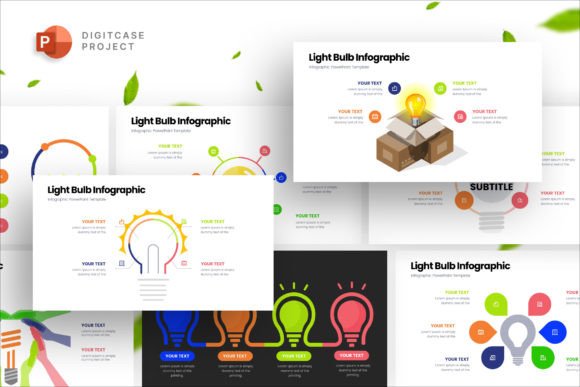
The Light Bulb Infographic Presentation is a pre-designed slide template built around the metaphor of a light bulb to represent ideas, innovation, solutions, and clarity. It is intended to simplify the process of creating business illustrations within media presentations. The template includes 26 slides, each designed with a full responsive 16:9 HD ratio display, ensuring compatibility with modern projectors and screens. All visual elements are vector-based, meaning they can be scaled, recolored, and repositioned without loss of quality. The package also includes a documentation file to guide users through customization.
One of the defining characteristics of this template is its emphasis on ease of use. It supports drag-and-drop image uploads, master slide options, and straightforward color adjustment. The template uses a free font, so no additional licensing is needed, and it does not require graphic design skills to operate. For professionals who need to produce polished infographics quickly, this template positions itself as a time-saving solution.
Why Consider the Light Bulb Infographic Presentation?
Understanding why someone might be drawn to this template is essential for evaluating its fit. The primary appeal lies in its balance of structure and flexibility. The 26-slide framework provides enough variety to cover different presentation sections without overwhelming the user with too many choices. The vector-based elements mean you can match your brand colors exactly, which is particularly valuable for corporate presentations where consistency matters.
Another reason professionals consider this template is the reduced learning curve. Because no graphic design expertise is required, team members who are not designers can still produce visually coherent slides. This can be a significant advantage in fast-paced work environments where presentations need to be assembled quickly. The master slide option also allows for global changes, so updating a color scheme or font across all slides can be done in seconds rather than manually editing each slide.
The light bulb theme itself carries a universal association with ideas and solutions, making it suitable for brainstorming sessions, innovation pitches, educational content, and problem-solving presentations. If your narrative frequently revolves around generating new concepts or explaining complex information visually, the thematic alignment can strengthen your message.
Benefits and Practical Advantages
When evaluating a presentation template, it helps to consider what it actually delivers in terms of day-to-day use. One clear benefit of the Light Bulb Infographic Presentation is its full vector architecture. Unlike raster images that become pixelated when scaled, vector graphics maintain sharpness at any size. This is particularly useful if you need to print slides or display them on large screens. It also means you can adjust colors, resize icons, and modify shapes without starting from scratch.
The drag-and-drop functionality is another practical advantage. Instead of wrestling with complex image placement, you can simply insert your visuals into pre-defined areas. This speeds up the workflow and reduces the likelihood of formatting errors. The 16:9 HD ratio is aligned with current display standards, so your slides will look natural on most devices without awkward cropping or black bars.
From a time management perspective, having 26 slides already structured means you can focus on content rather than layout. For recurring presentations, such as monthly reports or standard pitch decks, you can reuse the template consistently, which also helps build a recognizable visual identity over time.
Tradeoffs and Limitations to Consider
No template is a perfect fit for every situation, and the Light Bulb Infographic Presentation has its own tradeoffs. One limitation is that the theme is tied to the light bulb metaphor. If your presentation topic is unrelated to ideas, innovation, or solutions, the visual motif may feel mismatched. For example, a financial audit report or a compliance training session might not benefit from a light bulb-centric design. In such cases, a more neutral or industry-specific template could serve better.
Another consideration is the number of slides. While 26 slides provides a solid foundation, some users may find it restrictive if they need a much larger or smaller deck. You can duplicate or remove slides, of course, but the template is designed with a certain flow in mind. If you prefer to build your presentation from a completely blank canvas or need highly specialized layouts, this template may not offer enough freedom.
The template does not include stock photos. While this keeps the file size manageable and avoids licensing complications, it means you will need to source your own images. For some users, this is an extra step that adds time to the production process. Additionally, if you are not familiar with vector editing software, even simple adjustments might require a short learning period, despite the template being marketed as requiring no graphic skills. Basic familiarity with tools like Adobe Illustrator, PowerPoint, or similar vector-compatible software is still helpful.
There is also the question of originality. Because this is a pre-designed template, other users may purchase the same file. If your presentation is for a highly competitive context where unique visual branding is critical, you may want to invest in a custom design instead. That said, the ability to change colors and rearrange elements does provide some room for differentiation.
When Is the Light Bulb Infographic Presentation a Strong Fit?
Given its features and limitations, this template is particularly well-suited for specific scenarios. If you are preparing a pitch deck for a new business idea, a product launch, or an internal innovation workshop, the light bulb theme naturally reinforces your core message. It also works well for educational content where you need to explain concepts in a visually structured way, such as training modules, how-to guides, or knowledge-sharing sessions.
For small to medium-sized businesses that do not have a dedicated design team, this template offers a cost-effective way to produce professional-looking slides. The vector elements and master slide options mean you can maintain brand consistency without hiring a graphic designer. Similarly, freelancers and consultants who need to deliver polished presentations to clients will find the template useful for creating a consistent visual language across multiple projects.
Another strong fit is for non-profit organizations or educational institutions where budgets are limited but presentation quality still matters. With free fonts and no required graphic skills, the barrier to entry is low, and the results can still be impressive.
When Alternatives May Be Worth Considering
There are situations where alternative solutions might serve you better. If your presentation requires complex data visualizations, such as interactive charts or dynamic dashboards, a static infographic template may not be sufficient. In those cases, dedicated data visualization tools or presentation software with advanced charting features would be more appropriate.
If you are presenting in a highly regulated industry, such as healthcare or finance, where strict branding guidelines and compliance disclaimers are required, a generic template might need significant customization. In some instances, it may be simpler to work from an approved internal template rather than adapting a third-party design.
For users who prefer minimalistic or completely custom designs, the light bulb theme might feel too literal or stylized. If your brand identity leans toward abstract or minimalist visuals, a template with a strong central metaphor could clash with your existing materials.
Finally, if you anticipate needing extensive animation, interactivity, or non-linear navigation in your presentation, a slide-based template may not be the best medium. Tools like web-based presentation platforms or interactive PDFs might offer more flexibility for such use cases.
Practical Decision-Making Insights
To determine whether the Light Bulb Infographic Presentation aligns with your goals, start by mapping your presentation requirements against what the template offers. Consider the following questions:
- What is the core message of your presentation? If it revolves around generating ideas, solving problems, or explaining innovation, the light bulb theme adds visual reinforcement. If the topic is more procedural or factual, a neutral template may be a better fit.
- How much time do you have for preparation? The drag-and-drop functionality and master slide options can save hours of formatting time. If you are on a tight deadline, this template can accelerate your workflow. If you have ample time and want a highly unique design, custom work might be preferable.
- Who is your audience? For general business audiences, the light bulb motif is widely understood. For niche technical audiences, you may want visuals that reflect their specific domain.
- What is your budget? This template offers a low-cost alternative to hiring a designer. If your budget is flexible, a professional design service could deliver a more distinctive result. If your budget is constrained, this template provides solid value.
- What software are you using? Ensure that the file format is compatible with your presentation software. The template is described as using vector elements, but you should confirm that it works with PowerPoint, Keynote, Google Slides, or your preferred tool before making a purchase.
Another practical point is to test the template with a sample slide before committing to a full deck. This will give you a sense of how easily you can customize colors, insert images, and adjust layouts. It also lets you confirm that the final output matches your quality expectations.
Conclusion: Is It Right for You?
The Light Bulb Infographic Presentation template is a practical, time-saving tool for professionals who need to create visually consistent presentations around ideas and innovation. Its vector-based elements, easy color adjustment, and drag-and-drop functionality make it accessible even for those without design training. The 26-slide structure provides a solid framework for a variety of business and educational contexts.
However, it is not a universal solution. The thematic focus may not suit every topic, and users seeking highly original or interactive designs may need to look elsewhere. The absence of included stock photos and the reliance on vector editing software for advanced customization are also factors to weigh.
Ultimately, the decision comes down to how closely the template features match your specific presentation needs. For anyone who regularly creates presentations about ideas, solutions, or learning, the Light Bulb Infographic Presentation is a worthy option to consider. For specialized or highly branded content, exploring alternatives or investing in custom design may be the more effective path. By evaluating your requirements honestly, you can choose the approach that supports your message most effectively.