Understanding Hair Loss: A Complete Guide to Causes, Prevention, and Treatment for Men and Women
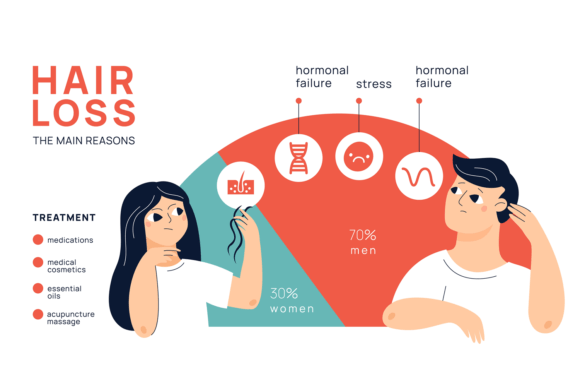
Hair loss is a deeply personal and often distressing experience that affects millions of people worldwide. It does not discriminate by gender, age, or background. For some, it is a gradual, expected part of aging; for others, it arrives suddenly, triggered by a health condition, hormonal shift, or stressful life event. Despite how common it is, hair loss remains widely misunderstood. Many assume it is purely genetic or unavoidable, but the reality is far more nuanced. By exploring the underlying biology — from follicle growth cycles to hormonal imbalances — we can separate myth from fact and build a clearer understanding of why hair thins, what it reveals about our overall health, and what we can actually do about it. This article breaks down the key elements of a comprehensive hair loss infographic, covering male and female alopecia, hormonal problems, baldness reasons, prevention strategies, and treatment options in an approachable, evidence-based way.
How Hair Grows: The Follicle Cycle Explained
To understand hair loss, you first need to understand how healthy hair grows. Each strand of hair on your scalp grows from a tiny organ called a hair follicle. These follicles go through a continuous cycle of growth, rest, and shedding. This cycle repeats throughout your life, but its timing and efficiency can be influenced by age, hormones, nutrition, and overall health.
The hair growth cycle consists of three main phases:
- Anagen (Growth Phase): This is the active growing stage, lasting anywhere from two to seven years. About 85–90% of the hairs on your scalp are in the anagen phase at any given time. The longer this phase lasts, the longer your hair grows.
- Catagen (Transition Phase): A short, two-to-three-week period where hair growth stops and the follicle shrinks. Only about 1% of hairs are in this phase at once.
- Telogen (Resting & Shedding Phase): Lasting around three to four months, the hair rests and then eventually falls out to make way for new growth. It is normal to shed 50 to 100 hairs per day as part of this natural cycle.
When any part of this cycle is disrupted — for example, by a hormonal imbalance, illness, or medication — the result can be visible thinning or patchy hair loss. Understanding the cycle is the first step toward recognizing what might be going wrong in your own body.
Why Hair Loss Happens: Common Causes and Underlying Mechanisms
Hair loss is rarely caused by a single factor. More often, it is the result of a combination of genetic predisposition, hormonal changes, medical conditions, lifestyle factors, and environmental triggers. Below are the most common reasons behind both male and female alopecia, as illustrated in typical hair loss infographics.
Genetic and Hormonal Influences (Androgenetic Alopecia)
By far the most common cause of hair loss is androgenetic alopecia, also known as male pattern baldness or female pattern hair loss. This condition is influenced by genetics and the hormone dihydrotestosterone (DHT), a derivative of testosterone. DHT binds to receptors in hair follicles, causing them to shrink over time. As follicles miniaturize, the anagen phase shortens, and the hairs that do grow become finer and thinner until they eventually stop growing altogether.
In men, this typically results in a receding hairline and thinning at the crown. In women, it more often presents as diffuse thinning across the top of the scalp, while the frontal hairline is usually preserved. The key takeaway is that this form of hair loss is progressive and requires early intervention to slow its advance.
Hormonal Problems Beyond Genetics
Hormones play a central role in hair health beyond just DHT. Thyroid disorders — both hyperthyroidism and hypothyroidism — are well-known causes of diffuse hair thinning. Pregnancy, childbirth, and menopause also bring dramatic hormonal shifts that can trigger temporary or persistent hair loss. For women, polycystic ovary syndrome (PCOS) often leads to elevated androgen levels, which can produce a pattern of hair thinning similar to male pattern baldness.
Even stress hormones like cortisol can affect the hair cycle. Chronic stress pushes more follicles into the telogen phase, leading to a condition called telogen effluvium, where hair sheds in noticeable amounts several months after a stressful event.
Medical Illness and Nutritional Deficiencies
Hair loss is sometimes an early warning sign of an underlying medical issue. Autoimmune diseases like alopecia areata cause the immune system to attack hair follicles, resulting in round, smooth patches of hair loss. Scalp infections such as ringworm can also cause patchy hair loss accompanied by redness or scaling.
Nutritional factors are equally important. Deficiencies in iron, vitamin D, vitamin B12, zinc, and protein can all disrupt the hair growth cycle. Crash dieting or rapid weight loss often triggers temporary shedding because the body diverts resources away from non-essential functions like hair growth.
Medications and Medical Treatments
Certain medications list hair loss as a side effect. Common culprits include blood thinners, beta-blockers, antidepressants, and nonsteroidal anti-inflammatory drugs. Chemotherapy and radiation therapy are dramatic examples, targeting rapidly dividing cells including those in hair follicles, but the hair usually regrows after treatment ends.
Male Pattern Baldness vs. Female Pattern Hair Loss: Key Differences
While the underlying mechanisms are similar, male and female pattern hair loss present differently, and they respond to treatment in distinct ways.
- Men: Typically begin with a receding frontal hairline (often forming an "M" shape) and thinning at the crown. Over time, these areas may merge, leaving only a horseshoe-shaped ring of hair. The Norwood scale is commonly used to classify the stages of male pattern baldness.
- Women: Usually experience diffuse thinning along the top of the scalp, with the frontal hairline remaining intact. The Ludwig scale categorizes female pattern hair loss into three grades based on the width of the parting. Women rarely go completely bald, but the thinning can be significant and emotionally distressing.
Understanding these differences is essential because it affects how you monitor your own hair health and what treatment approaches are most appropriate.
Prevention and Treatment: What Actually Works
The good news is that not all hair loss is permanent, and even genetic hair loss can be managed with the right approach. The earlier you act, the better your chances of preserving the hair you have. Below is a practical breakdown of evidence-based prevention and treatment strategies, aligned with what you would find in a thorough hair loss infographic.
Lifestyle and Nutritional Adjustments
For many people, optimizing diet and lifestyle can make a meaningful difference in hair density and quality.
- Eat a balanced diet rich in protein, iron, zinc, and vitamins A, C, D, and B-complex. Leafy greens, eggs, nuts, seeds, fish, and lean meats are excellent choices.
- Avoid crash diets and rapid weight loss, which can shock the system and trigger shedding.
- Manage stress through mindfulness, exercise, and adequate sleep. Lowering cortisol levels can help stabilize the hair cycle.
- Be gentle with your hair: avoid tight hairstyles, excessive heat styling, and harsh chemical treatments that can cause traction alopecia or breakage.
For individuals with identified deficiencies, targeted supplementation under medical guidance can restore normal growth. Iron, vitamin D, and zinc are among the most commonly needed supplements for hair health.
Medical Treatments Approved for Hair Loss
For androgenetic alopecia, two treatments are widely approved and supported by clinical evidence:
- Minoxidil (Rogaine): An over-the-counter topical solution or foam applied to the scalp. It is believed to stimulate blood flow to follicles and prolong the anagen phase. It works for both men and women, though results vary and it must be used continuously to maintain benefits.
- Finasteride (Propecia): An oral prescription medication for men that blocks the conversion of testosterone to DHT. It can slow hair loss and promote regrowth in many cases. Women who are pregnant or may become pregnant should not handle crushed or broken finasteride tablets.
For women with hormonal imbalances, treatments may include anti-androgen medications (like spironolactone), oral contraceptives, or hormone replacement therapy, depending on the underlying cause.
Advanced and Emerging Therapies
For those who do not respond to first-line treatments, several advanced options exist:
- Platelet-rich plasma (PRP) therapy: A concentration of your own platelets is injected into the scalp to stimulate follicle activity and growth factors.
- Low-level laser therapy (LLLT): Devices like laser combs or caps deliver red light energy to the scalp, believed to increase cellular activity in follicles.
- Hair transplant surgery: Follicular unit extraction (FUE) or follicular unit transplantation (FUT) move healthy follicles from a donor area to thinning or bald regions. This is a permanent solution for suitable candidates.
Always consult a dermatologist or trichologist before starting any treatment. A proper diagnosis — including blood work and scalp examination — is essential to tailor the approach to your specific condition.
Common Misunderstandings About Hair Loss
With so much information available, it is easy to fall for myths that delay effective treatment. Let's clarify a few persistent misunderstandings.
- Myth: Wearing hats causes baldness. Hats do not restrict blood flow enough to affect follicles. This is false.
- Myth: Only men lose hair due to genetics. Women also experience hereditary hair loss, though it presents differently.
- Myth: Shaving makes hair grow back thicker. Shaving has no effect on the follicle or hair thickness; it only creates a blunt tip as the hair grows out.
- Myth: Hair loss is always permanent. Many types — such as telogen effluvium, nutrient-related shedding, or medication side effects — are reversible once the trigger is addressed.
Putting It All Together: A Broader Understanding
Hair loss is not just a cosmetic issue; it is a reflection of your body's internal state. From the garish vector diagrams of infographics to the detailed medical charts seen in a doctor's office, the message is consistent: healthy hair requires a healthy body. By learning about the follicle growth cycle, recognizing the signs of hormonal or nutritional imbalance, and understanding the differences between male and female alopecia, you are better equipped to identify problems early and seek effective help.
Whether you are just beginning to notice a wider part in the mirror or you have been managing thinning hair for years, the path forward is grounded in the same principles: accurate diagnosis, targeted intervention, and consistent care. Modern medicine and lifestyle science offer more tools than ever to slow, stop, or even reverse hair loss when approached correctly. The goal is not perfection — it is progress, and understanding your own unique biology is the most powerful first step you can take.
Always consult a qualified healthcare professional before starting any new treatment or supplement regimen for hair loss.