Infographic 3D Illustration Pack: Elevating Visual Communication with Depth and Clarity
In an age where digital content competes for every second of attention, the way information is presented matters more than ever. Static charts and flat icons, once the backbone of presentations and infographics, are increasingly giving way to richer, more immersive visuals. The Infographic 3D Illustration Pack arrives at a moment when professionals across industries are seeking new ways to make data and ideas memorable. This collection offers a practical bridge between complex information and engaging design, providing tools that are as functional as they are visually striking.
Whether you are preparing a corporate presentation, building a website interface, or designing a poster for an upcoming seminar, the shift toward three-dimensional illustration reflects a deeper change in how audiences expect to experience content. People today are surrounded by high-quality visuals from social media, streaming platforms, and interactive applications. Their brains are primed to process depth, lighting, and spatial cues almost instantly. The Infographic 3D Illustration Pack responds to this reality by delivering assets that feel modern, polished, and immediately communicative.
Why 3D Illustrations Matter in Today’s Visual Landscape
The evolution of infographic design has been steady but profound. Early infographics relied heavily on simple bar charts, basic icons, and blocks of text. Over time, designers introduced vector illustrations, custom typography, and brand-specific color palettes to differentiate their work. Today, the next frontier is dimensional design. Three-dimensional illustrations add a layer of realism and tangibility that flat graphics cannot replicate. They create a sense of presence, making abstract concepts like growth, workflow, or collaboration feel almost physical.
The Infographic 3D Illustration Pack taps directly into this trend. By offering pre-built 3D assets tailored for office work, business themes, presentations, and seminars, it enables creators to skip the steep learning curve of 3D modeling and go straight to implementation. This aligns with a broader market preference: professionals no longer have the luxury of spending days rendering a single scene. They need reliable, high-quality assets that work across platforms and adapt to different contexts.
From a psychological perspective, depth cues in images trigger stronger neural responses. People remember 3D visuals longer than their 2D counterparts because the brain engages more deeply with spatial information. For educators, marketers, and business leaders, this translates directly into better retention of key messages. The Infographic 3D Illustration Pack allows you to present annual reports, product roadmaps, or training materials in a way that feels contemporary and credible.
How the Pack Fits into Modern Workflows
Design and content creation have become collaborative, multi-tool processes. A single project might move from brainstorming in a whiteboard app to drafting in Adobe Photoshop, then to final assembly in Blender or Illustrator. The compatibility of the Infographic 3D Illustration Pack across Adobe Photoshop, Blender, and Illustrator is not just a technical detail—it is a reflection of how modern creators work. You can use the PNG renders for quick mockups or web assets, then open the Blender files for deeper customization if needed.
For UI and UX designers, the pack offers an opportunity to introduce depth without sacrificing performance. Placing a 3D business scene as a hero banner on a landing page or as a decorative element in a mobile app interface can significantly enhance the user’s first impression. The high-resolution images at 3000x2000 pixels ensure crispness on retina displays and large screens alike. This eliminates the common frustration of scaling up assets only to find them pixelated or blurry.
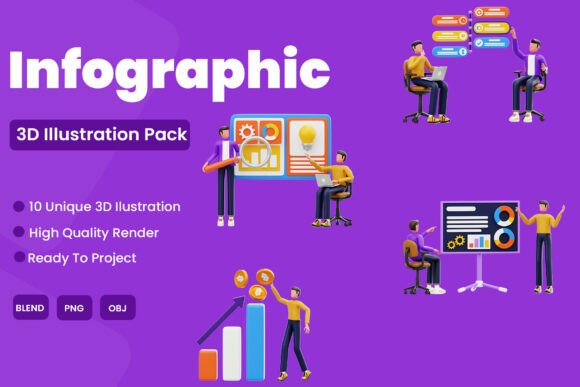
Entrepreneurs and small business owners, who often wear multiple hats, will appreciate the efficiency. Instead of hiring a 3D artist or spending hours learning complex modeling software, you can select from ten ready-to-use scenes. These scenes cover a range of contexts—meeting rooms, data charts, office desks, seminar setups, and more—allowing you to maintain a consistent visual language across your presentations, social media posts, and printed materials.
Realistic Applications Across Professions
The versatility of the Infographic 3D Illustration Pack becomes apparent when you consider specific use cases. A marketing professional preparing a quarterly review presentation can use a 3D infographic scene to break down revenue streams, customer acquisition data, or market share metrics. The dimensional chart elements naturally draw the eye, making it easier for stakeholders to follow complex narratives without feeling overwhelmed.
For educators and corporate trainers, the pack supports seminar and workshop materials. Visualizing a training module about team collaboration or process improvement with a three-dimensional office setup helps learners connect abstract ideas with real-world spaces. This practical grounding improves engagement and reduces the cognitive load typically associated with dense text-based slides.
Freelance designers and creative agencies can integrate these assets into client projects with confidence. Whether you are designing a poster for a tech conference, a banner for a business expo, or the visuals for an online course, the 3D elements add a layer of professionalism that sets your work apart. The availability of both Blender source files and PNG renders means you can iterate quickly on client feedback without needing to rebuild scenes from scratch.
Content Creators and Bloggers: A New Visual Vocabulary
Bloggers and content creators covering business, career development, productivity, or technology topics can use the Infographic 3D Illustration Pack to elevate their article headers, social media cards, and lead magnets. A thumbnail that features a well-designed 3D desk with charts and a laptop instantly signals authority and modernity. In a crowded content landscape, that first visual impression often determines whether a reader clicks or scrolls past.
The pack also supports the growing preference for visual storytelling over text-heavy explanations. When you embed a dimensional infographic within a blog post, you provide readers with an anchor that summarizes or highlights the core takeaway. This helps with comprehension, especially for mobile readers who may be skimming. The 3000x2000 resolution ensures that even when these images are used as full-width hero banners, they remain sharp and impactful.
The Practical Value of Pre-Built 3D Assets
Creating custom 3D illustrations from scratch is a time-intensive skill that requires knowledge of modeling, texturing, lighting, and rendering. For most professionals, this is neither practical nor necessary. The Infographic 3D Illustration Pack solves this by providing ten fully finished scenes that require only minimal adjustment to align with your brand or project. This approach acknowledges the real constraints of budgets, deadlines, and expertise that shape modern creative work.
Each file in the pack has been designed with balance and clarity in mind. The compositions avoid clutter, focusing instead on the visual core of each scene. This makes them suitable for both detailed analysis and quick scanning. Whether you use them as standalone visuals or layer additional text and data on top, the images maintain their readability and aesthetic appeal.
Another practical advantage is the consistency across the pack. Because all assets come from the same design system, you can mix and match scenes within a single presentation or website without jarring style shifts. This cohesion is often what separates amateur-looking materials from professional publications. For businesses that need to present a unified brand image across multiple touchpoints, this consistency saves significant design time and reduces the risk of visual dissonance.
Adapting to Different Media and Screen Sizes
Modern content rarely lives in one format. The same infographic might appear in a YouTube video thumbnail, a printed brochure, an email newsletter, and a slide deck. The Infographic 3D Illustration Pack’s high-resolution assets are designed to handle this variety. PNG files with 3000x2000 pixels give you flexibility to crop, resize, or reposition elements without losing quality. For those who use Blender, the source files allow further adjustments to camera angles, lighting, and object placement to better fit specific layout needs.
This adaptability is especially relevant given the diversity of devices and platforms today. A design that looks compelling on a 27-inch monitor should also read well on a smartphone screen. The bold compositions and clear focal points in the pack help ensure that the core message remains visible even when scaled down. This thoughtful design consideration reduces the need for multiple versions of the same visual, saving time and reducing the chance of inconsistencies across channels.
E-E-A-T and the Value of Authentic Design Tools
From an expertise, authoritativeness, and trustworthiness standpoint, the value of design assets lies in their ability to help creators produce work that meets professional standards. The Infographic 3D Illustration Pack supports this by offering files that are built with attention to lighting, composition, and thematic relevance. These are not generic 3D shapes thrown together; they are curated scenes that reflect real-world business and educational settings.
For the end user, this means less time correcting poor design choices and more time focusing on the message. The pack respects the user’s skill level, whether they are a seasoned designer or a small business owner handling marketing for the first time. By lowering the barrier to high-quality 3D illustration, the pack empowers a broader range of professionals to produce content that aligns with contemporary expectations.
Trust also comes from transparency about file types and compatibility. The explicit mention of Blender, Photoshop, and Illustrator compatibility, along with the inclusion of both native 3D files and pre-rendered PNGs, gives users clear expectations about what they can achieve. There are no hidden dependencies or unexpected technical requirements. This straightforward approach is refreshing in a market where digital products sometimes promise more than they deliver.
Recommendations for Getting the Most Out of the Pack
To maximize the value of the Infographic 3D Illustration Pack, consider starting with the PNG files for quick turnaround projects like social media graphics or email headers. The high resolution allows you to add text overlays in Photoshop or Canva without sacrificing quality. For longer-term projects such as website redesigns or comprehensive brand guidelines, open the Blender files to tweak colors, angles, or props so that they align perfectly with your brand palette and visual identity.
Another recommendation is to use the pack as a springboard for storytelling. Instead of treating each image as a standalone visual, think about how multiple scenes can work together to form a narrative arc. For instance, a presentation about company growth could open with a 3D office scene, transition to a data chart illustration, and conclude with a seminar-style visual showing future plans. This cohesive use of 3D assets reinforces the message and creates a polished, professional experience for the audience.
Finally, keep in mind that the pack is not limited to business and corporate contexts. Educators designing course materials, non-profit organizations preparing impact reports, and even event planners creating promotional content can find relevant scenes. The office and seminar themes are broad enough to support a wide range of messages, from productivity and innovation to collaboration and learning.
Looking Forward: The Role of 3D in Everyday Design
The shift toward three-dimensional illustration in professional communication is not a passing trend. As hardware capabilities improve and software becomes more accessible, audiences will continue to expect richer visual experiences. The Infographic 3D Illustration Pack offers a practical entry point into this evolving landscape, providing tools that are both current and adaptable to future needs.
For creators who want to stay relevant, investing in quality design assets is no longer optional. The bar for what constitutes professional content has risen, and 3D illustrations are becoming a baseline expectation rather than a differentiator. By using packs like this one, you ensure that your materials remain engaging, clear, and competitive without requiring a specialist skill set.
In a practical sense, the pack represents a shift in how design resources are created and distributed. The emphasis on compatibility, resolution, and ease of use reflects a market that values efficiency and results over complexity. Whether you are a freelancer managing multiple clients, a marketer racing toward a deadline, or an educator preparing next semester’s materials, having reliable, high-quality 3D assets at your fingertips changes the way you work.
The Infographic 3D Illustration Pack is more than a collection of files. It is a tool that adapts to your workflow, respects your time, and helps you communicate with clarity and confidence. In a world where every detail matters, adding depth to your visuals is a simple but powerful way to make your message stand out.